BOPIS stands for buy online, pick up in store. A shopper places an order on a retailer's website or app, chooses a nearby store, and collects the order there, often the same day, instead of waiting for delivery.
It sounds simple, and for the shopper it is. Behind the scenes, BOPIS depends on accurate store inventory, a fast in-store picking process, and clear communication at every step. This guide explains how a BOPIS order works, why retailers offer it, where it breaks, and what it takes to run it well across many stores.
What does BOPIS mean?
BOPIS is a fulfillment option where the store, not a warehouse, fulfills an online order from its own shelves, and the customer comes to collect it. You will also see it called click and collect, buy online pick up in store (BOPUS), or store pickup. Curbside pickup is a variation where an associate brings the order out to the customer's car.
For retailers with physical stores, BOPIS turns every location into a pickup point without adding delivery cost. For shoppers, it combines the convenience of ordering online with the speed of walking out with the item the same day.
How a BOPIS order works
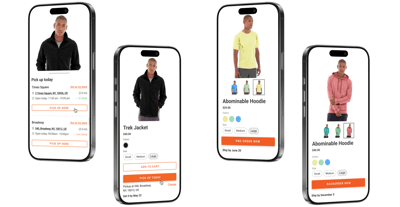
A BOPIS order moves through six steps. First, the shopper picks a product and a store. Ideally the product page shows which nearby stores have it in stock before the shopper reaches checkout. Second, the system checks that the chosen store can actually sell the item, not just that it has the item on hand.
Third, the order goes to that store, and associates are alerted so they can start right away. Fourth, an associate picks the item from the shelf, packs it, and sets it aside. Fifth, the shopper gets a message that the order is ready for pickup. Sixth, the shopper arrives, the associate confirms who is collecting the order, and hands it over.
Every step has a handoff, from the storefront to the store and from the store back to the shopper. Each handoff is a place where a BOPIS order can stall, which is why the details matter.
Why retailers offer BOPIS
BOPIS is popular because it works for both sides. Shoppers get their order faster and skip the shipping fee. Retailers skip the last-mile delivery cost on every pickup order, and they put store inventory to work for online demand instead of letting it sit on the shelf.
A pickup is also a store visit, and store visits drive extra sales. In a survey of 1,004 US adults by the International Council of Shopping Centers, 67% of click-and-collect users said they buy additional items from the retailer when they pick up their order (ICSC, 2019).
What goes wrong with BOPIS
Most BOPIS problems come from four gaps. The first is showing stock the store does not really have. If the product page counts every unit on hand, including the last display piece or units already promised to other orders, shoppers order items that are not there. The associate cannot find the item, and the order is canceled.
The second is slow picking. If the store does not know an order has arrived, nobody starts it until the customer walks in and asks. The third is uncollected orders. Orders that sit on the pickup shelf for days tie up inventory that could sell to someone else. We cover this in the cost of forgotten orders.
The fourth is having no recovery option. When an item cannot be found, the easy response is to cancel the order. A better one is to offer another store, home delivery, or a transfer to the original pickup store, as explained in our guide to handling BOPIS fulfillment failures.
What you need to run BOPIS well
Running BOPIS across many stores takes four things. The first is accurate store availability. Show pickup based on what each store can sell, which means units on hand minus orders already reserved and a safety stock held back for walk-in shoppers. Our post on inventory on the shelf vs inventory for sale explains why stores need these protection rules.
The second is a simple app for store associates. It should alert them to new orders, remind them about orders nobody has started, and guide them through picking, packing, and handover. The third is clear pickup communication. Send the ready-for-pickup message only once the order is packed, and remind customers who have not collected it. The fourth is a plan for failures: a way to reroute or transfer orders a store cannot fill, and a set point at which an uncollected order is canceled and refunded.
BOPIS vs curbside pickup vs ship from store vs ship to store
These four options are often confused. Here is how they differ.
| Option | Stock comes from | How the customer gets it | Typical speed |
|---|
| BOPIS | The pickup store's own stock | Collects it inside the store | Same day, often within hours |
| Curbside pickup | The pickup store's own stock | An associate brings it to the car | Same day, often within hours |
| Ship from store | A nearby store's stock | Delivered to the customer's address | Same day to a few days, depending on the carrier |
| Ship to store | A warehouse or another store | Collects it at the chosen store once it arrives | A few days |
What is curbside pickup?
Curbside pickup is a way to collect an online order without going inside the store. The shopper buys online, chooses a store, and parks outside when the order is ready. A store associate brings the order out to the car.
Behind the scenes, curbside pickup works like BOPIS. The order is filled from the pickup store's own stock, associates pick and pack it in the same way, and the shopper gets a message when it is ready. The only step that changes is the handover, which happens at the car instead of at the counter. That is why retailers usually run curbside pickup and in-store pickup from the same system, and why the same inventory accuracy and store capacity limits apply to both.
In HotWax Commerce, curbside pickup runs on the same BOPIS workflow, so store teams use one process for both handovers.
Many retailers offer all four. Ship to store is a useful fallback when the chosen store is out of stock, so the customer can still pick up where they wanted. For more on the store-delivery side, see our ship from store page.
* * *
HotWax Commerce is an omnichannel order management system that runs BOPIS for retailers on Shopify and other platforms. Online ATP calculates each store's pickup availability after reservations and safety stock. The BOPIS PDP app shows that availability on the product page, with store search sorted by distance, a saved My Store, and a Store Mode for browsing what is available today. In the store, the BOPIS Fulfillment App works inside Shopify POS. It gives associates new-order notifications, open-order reminders, and a pick, pack, and handover flow with proof of delivery, and lets them resend the pickup reminder to customers. When a store cannot fill an order, associates can use Request Transfer to turn it into a ship to store order, and customers can choose another option through a re-route link. Learn more about our BOPIS software, or read the Shopify BOPIS launch checklist.
Talk to our team to see how HotWax Commerce can run same-day pickup across your stores.
Frequently asked questions about BOPIS