


HotWax Commerce sits in the middle, connected to your Shopify store above it. Around it, HotWax Commerce runs pick up in store, ship from store, pre-orders, order routing, store inventory, and returns and exchanges: an order is ready for pickup, another ships from the Brooklyn store, a pre-order arrives Nov 18, an order is routed to the best store, 6 sellable units are sent to Shopify, and an exchange is sent to the ERP.

Pick up in store
Ready for pickup
Ship from store
Shipped from Brooklyn
Pre-orders
Arrives Nov 18
Order routing
Routed to the best store
Store inventory
6 sellable sent to Shopify
Returns and exchanges
Exchange sent to the ERP
Sell more of what you hold.
Deliver faster from anywhere.
Spend less on every order.
HotWax Commerce is on the Shopify App Store and follows Shopify’s releases. Shopify keeps running your storefront, checkout, and POS, and HotWax Commerce runs the orders and inventory behind them.

Shopify
Storefront and checkout
HotWax Commerce
Shopify
Shopify POS
HotWax Commerce
Shopify
Orders and customers
HotWax Commerce
The OMS counts the stock at every store and warehouse, holds back what each one needs, and publishes the number each Shopify location can really sell, in real time.
Sellable, sent to ShopifyHeld for ordersSafety stock
The OMS checks stock, distance, and shipping cost for every Shopify order, then routes it to the store or warehouse that can get it there fastest for less.
Your operations team sets which locations to try first, and can change that any time without a developer.
Stores past their daily order limit or their cutoff time are skipped, so no store gets more than it can ship.
Test Drive runs one order through your rules and shows why each location was picked or skipped, with the stock at each.
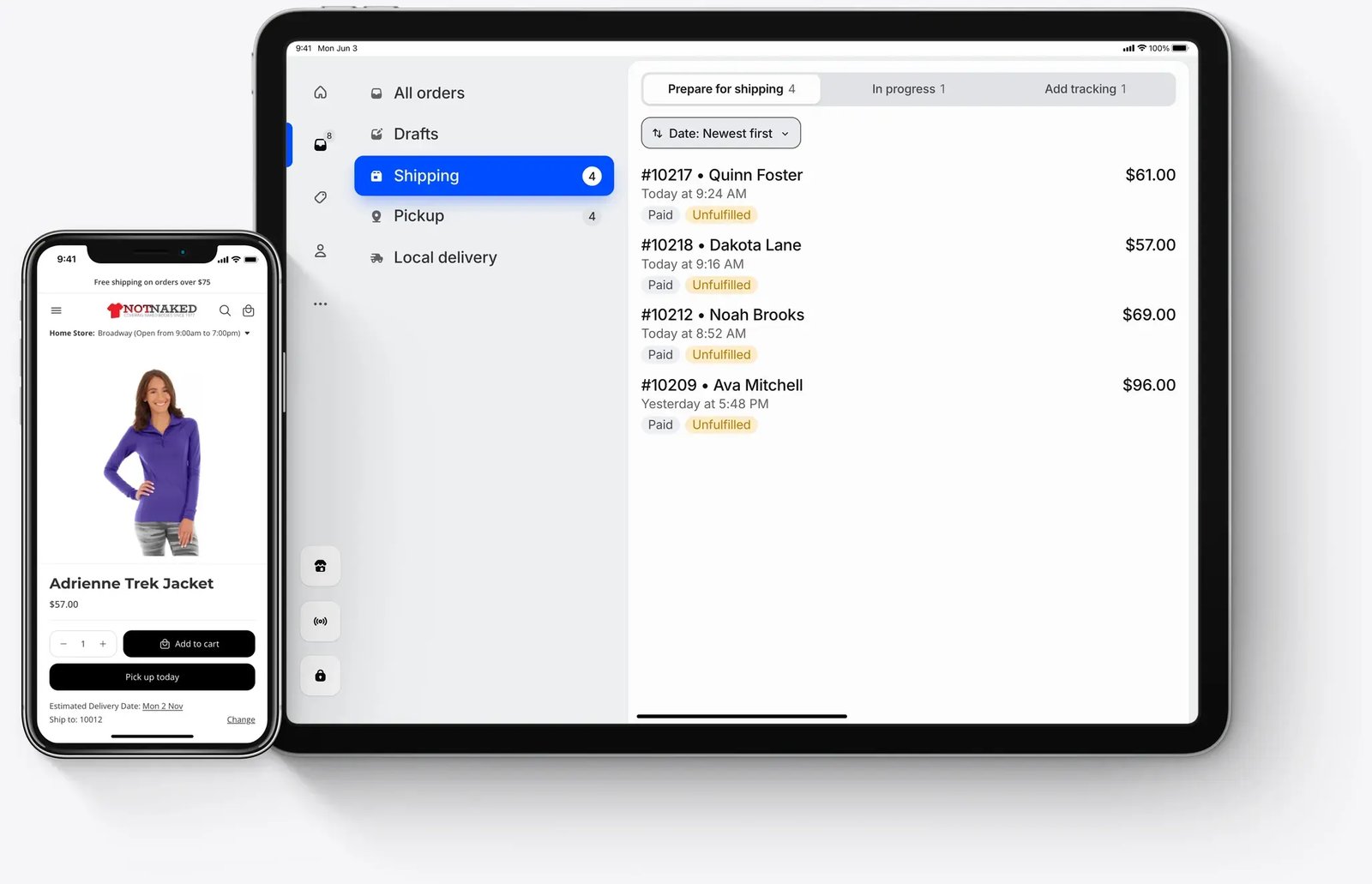
Every store becomes a place to ship Shopify orders from, so shoppers get them sooner and you pay less to ship.
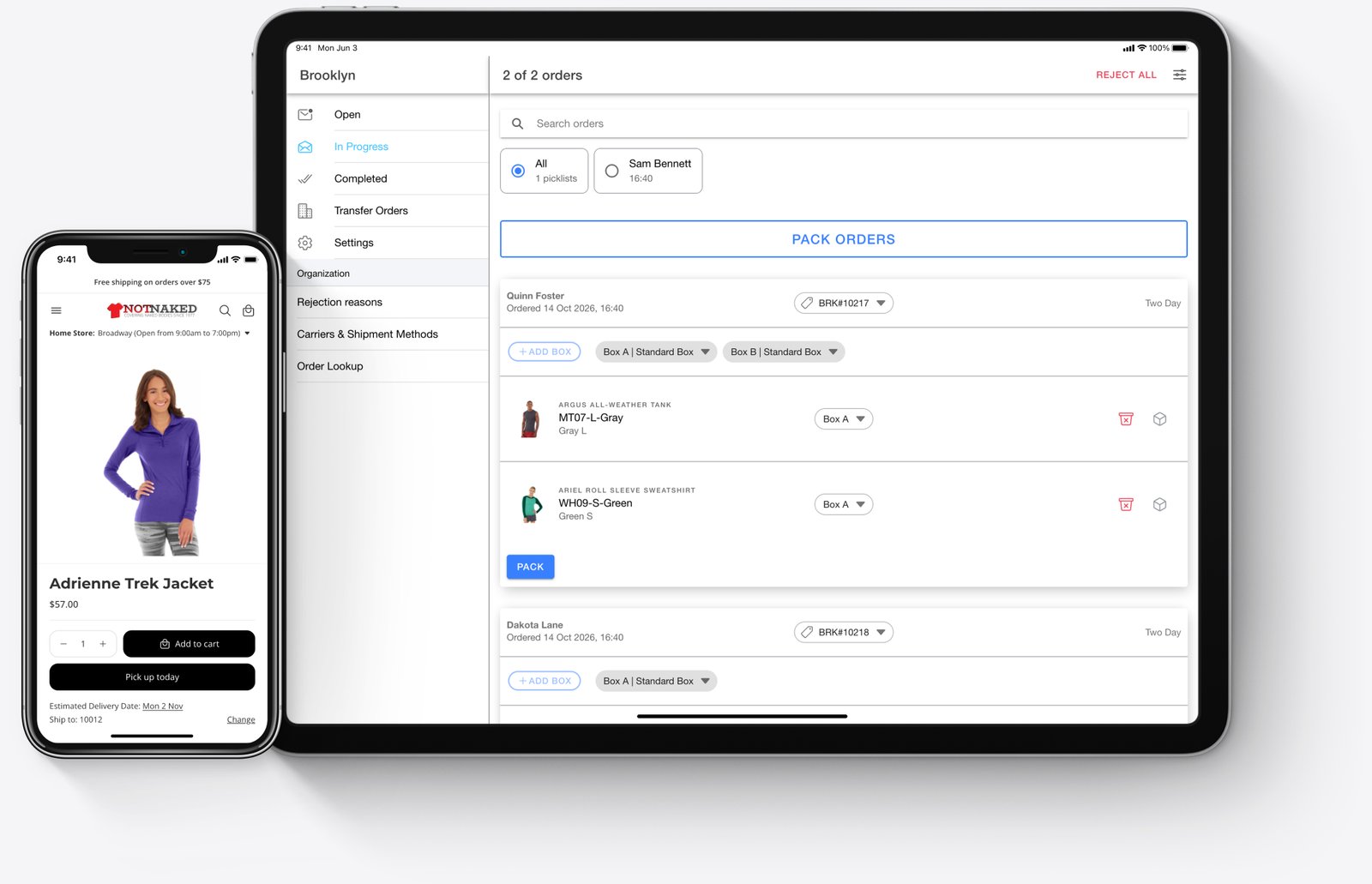
The team ships from the Shipping list in Shopify POS. The OMS still routes every order to the best store and keeps stock in sync.
The Shopify product page shows when the item arrives, based on the nearest store or warehouse that has it.
The OMS routes each Shopify order to the store or warehouse your rules pick, by stock, distance, and cost.
Each shipment and its tracking number sync back to the Shopify order, which is then marked fulfilled.
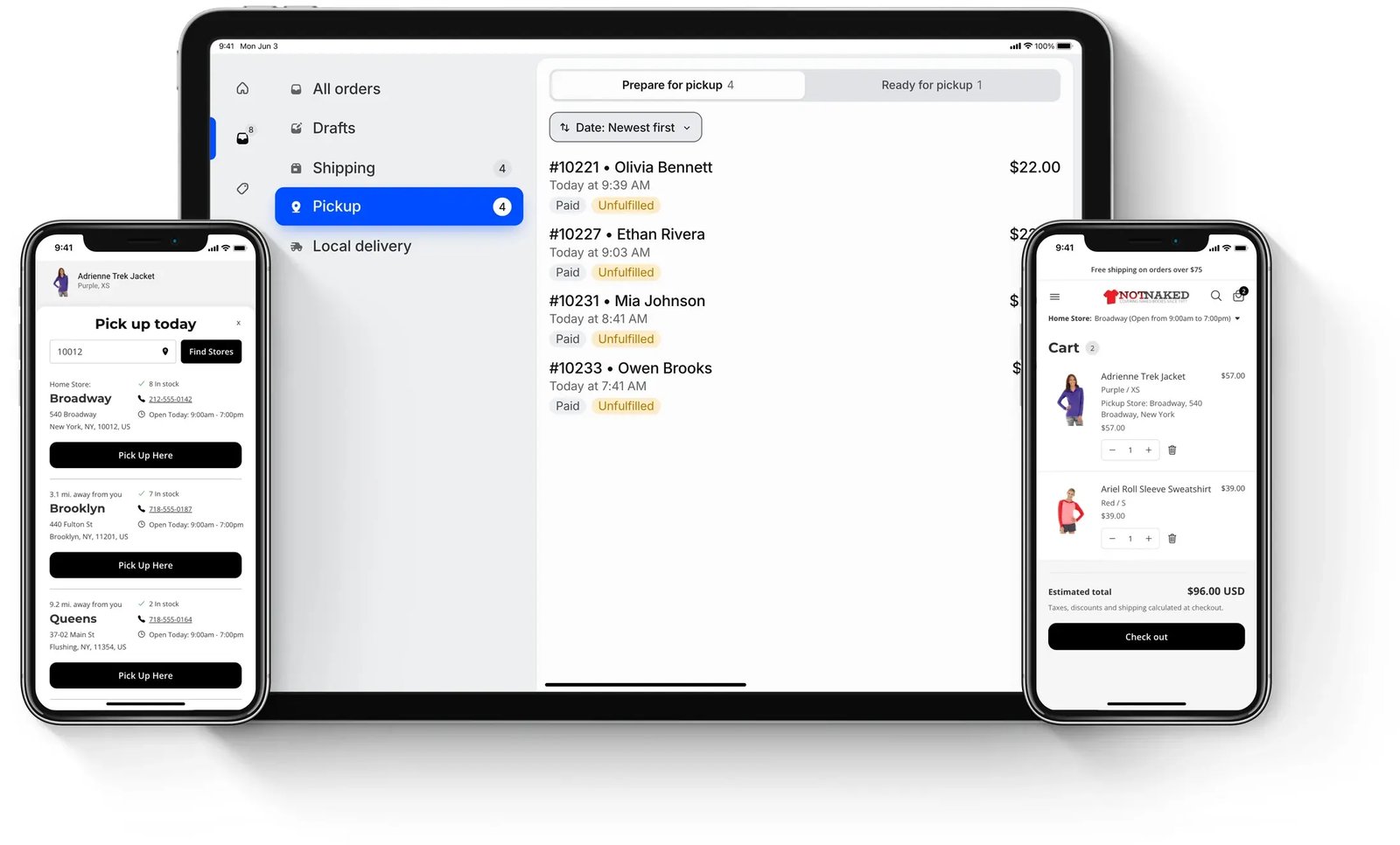
From the Shopify product page to the store counter, the OMS shows shoppers where the item is and gets every pickup order to the right store the same day.
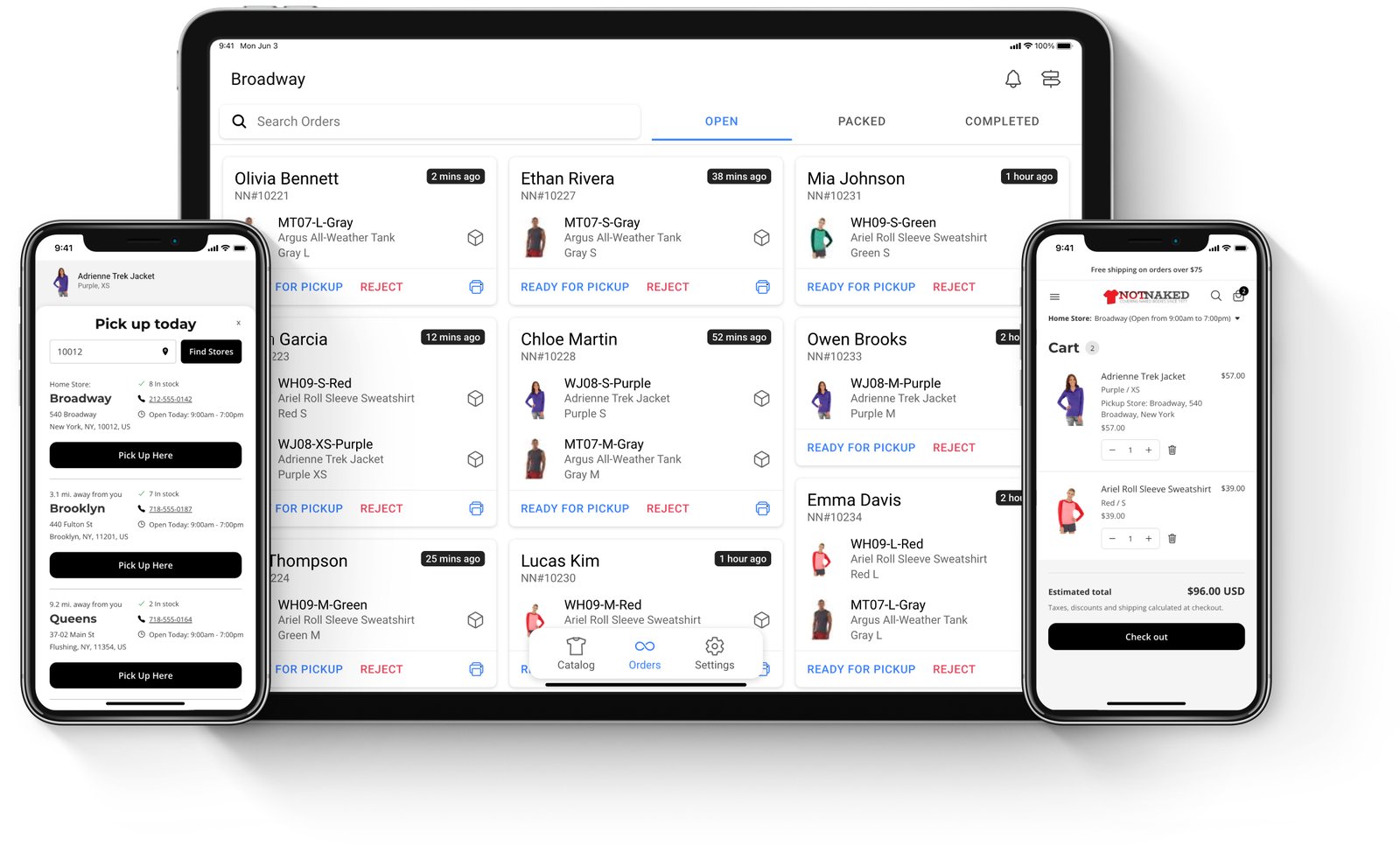
The store team works from the Pickup list in Shopify POS. The OMS still routes each pickup order to the store the shopper chose.
The Shopify product page shows nearby stores with stock, hours, and distance, so shoppers pick up where the item is.
Shoppers put items to pick up and items to ship in one cart and check out once, instead of placing two orders.
Shoppers can choose or change their pickup store on the product page, in the cart, and at checkout.
Sell new styles before they land. The OMS turns the Shopify button into Pre-order, shows the ship date from your purchase order, and releases pre-orders for fulfillment once the stock is received.
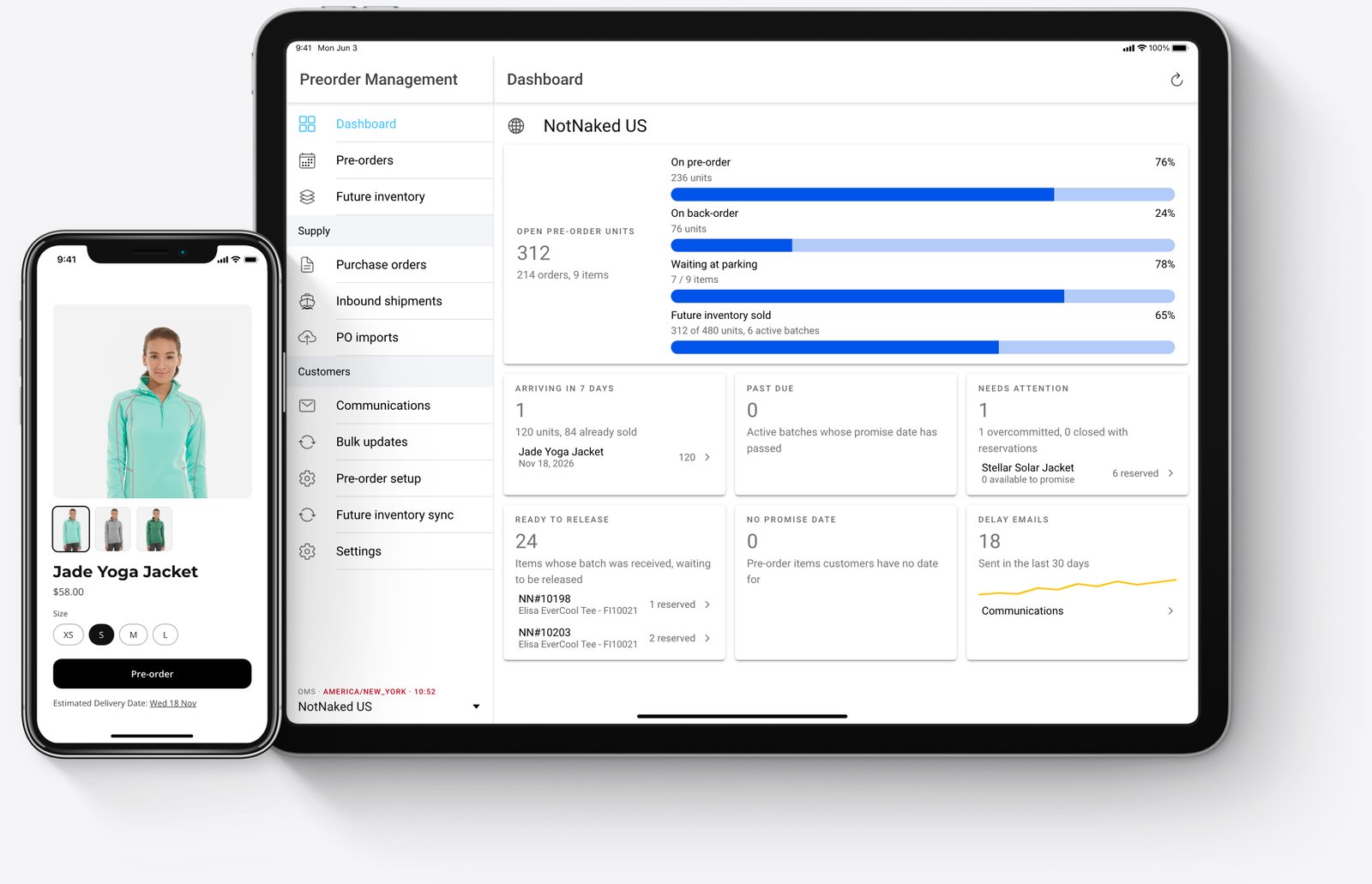
When an item is out of stock with more on the way, the Shopify product page shows Pre-order and a delivery date based on the purchase order.
Shoppers can only pre-order what the purchase order brings in, less the safety stock you hold back. When that runs out, the button changes to Out of stock.
Pre-orders wait until the stock is received, then the OMS routes them first. What is left goes on sale.
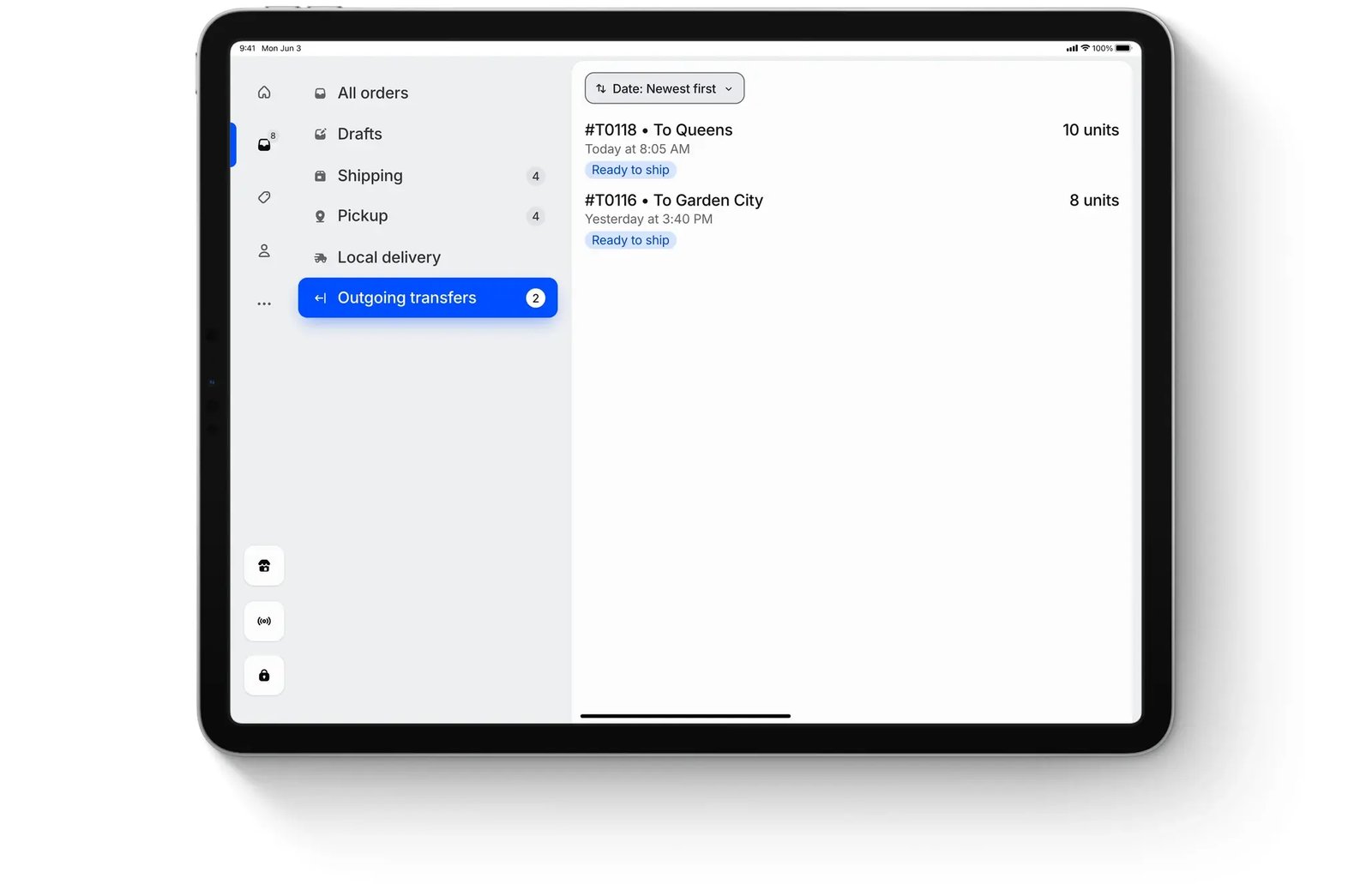
Head office approves a transfer in the OMS. The sending store packs it, prints the shipping label, and ships it, and the receiving store checks it in.
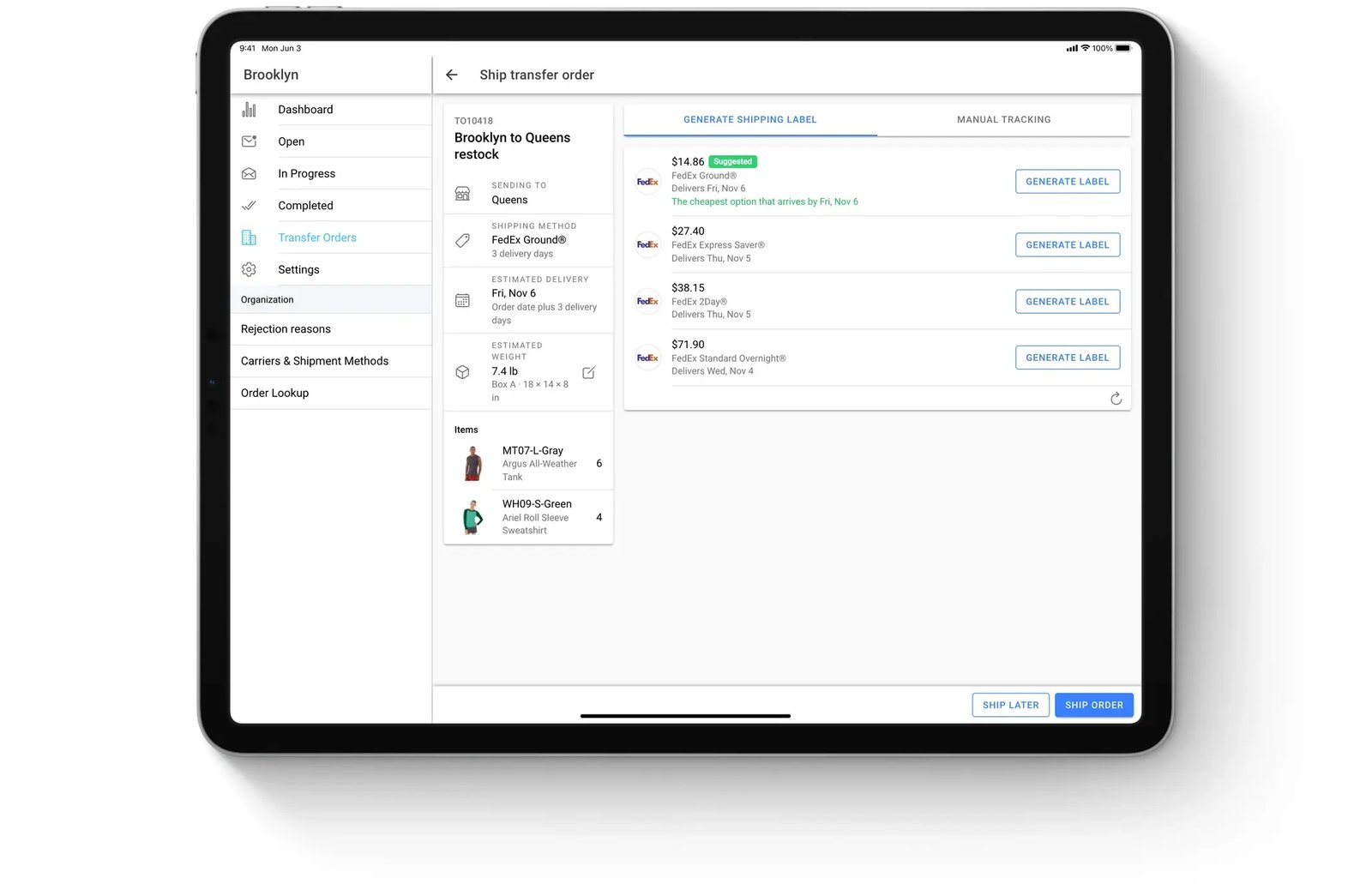
Store teams pick, pack, and send approved transfers from Outgoing transfers in Shopify POS. Shopify POS can’t buy or print a shipping label, so tracking is added separately.
Transfers are created and approved in the OMS, or come in from the ERP.
Shipping and receiving sync between the OMS, Shopify, and the ERP.
When the other store receives it, anything short, extra, or mis-shipped is flagged.
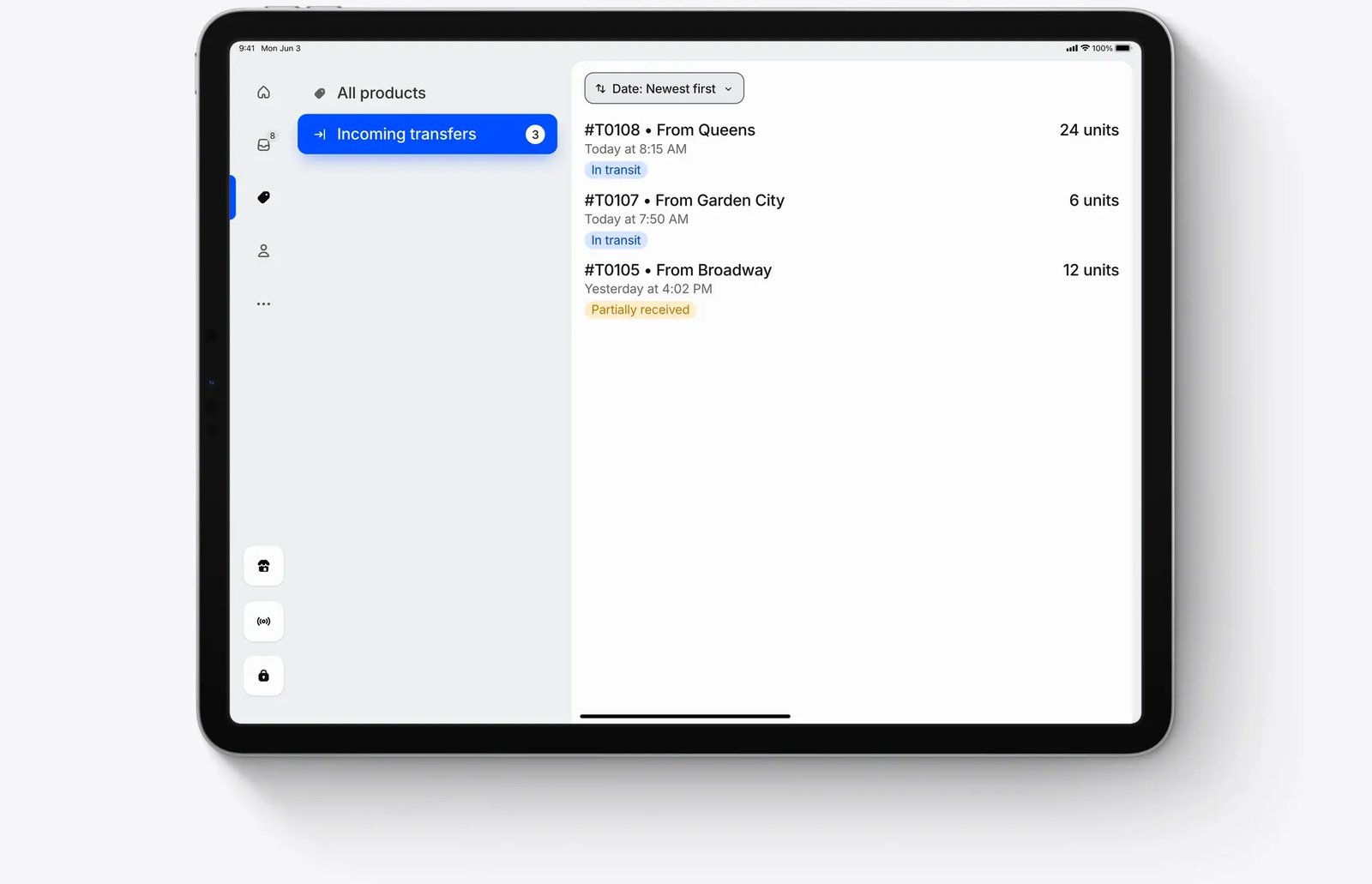
Store teams receive transfers, purchase orders, and returns without leaving Shopify POS, and the OMS updates every Shopify location as soon as stock is in.
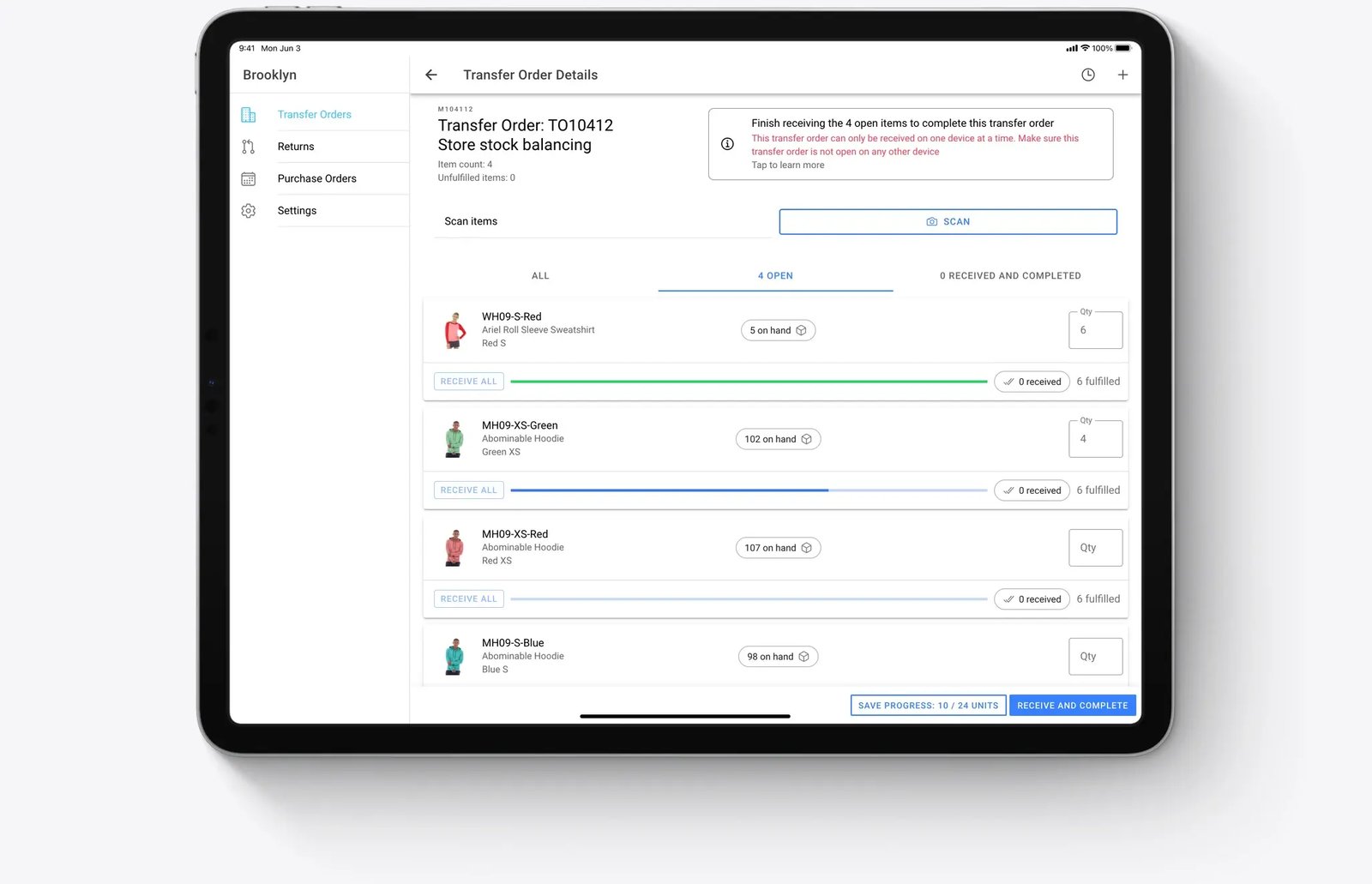
Store teams receive transfers in Shopify POS. Transfers approved in the OMS arrive as native Shopify transfers.
Received stock updates the OMS right away, which syncs it to Shopify and posts the receipt to the ERP.
Head office sees what was expected, what was received, and the difference for every item.
Once stock is in, the OMS can route online orders to that store.
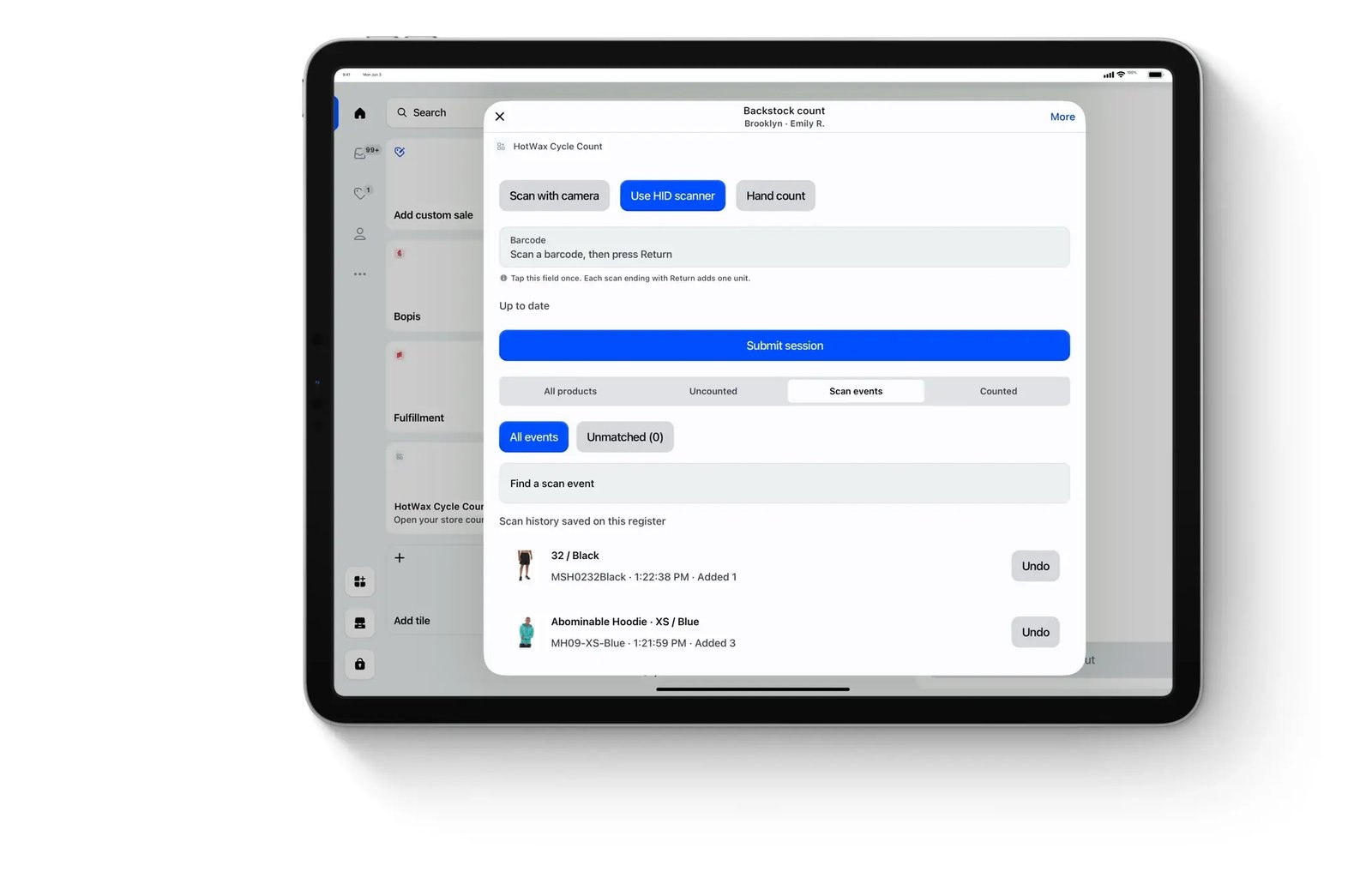
Head office assigns counts, store teams count the shelf without leaving Shopify POS, and the OMS changes stock only after each count is approved.
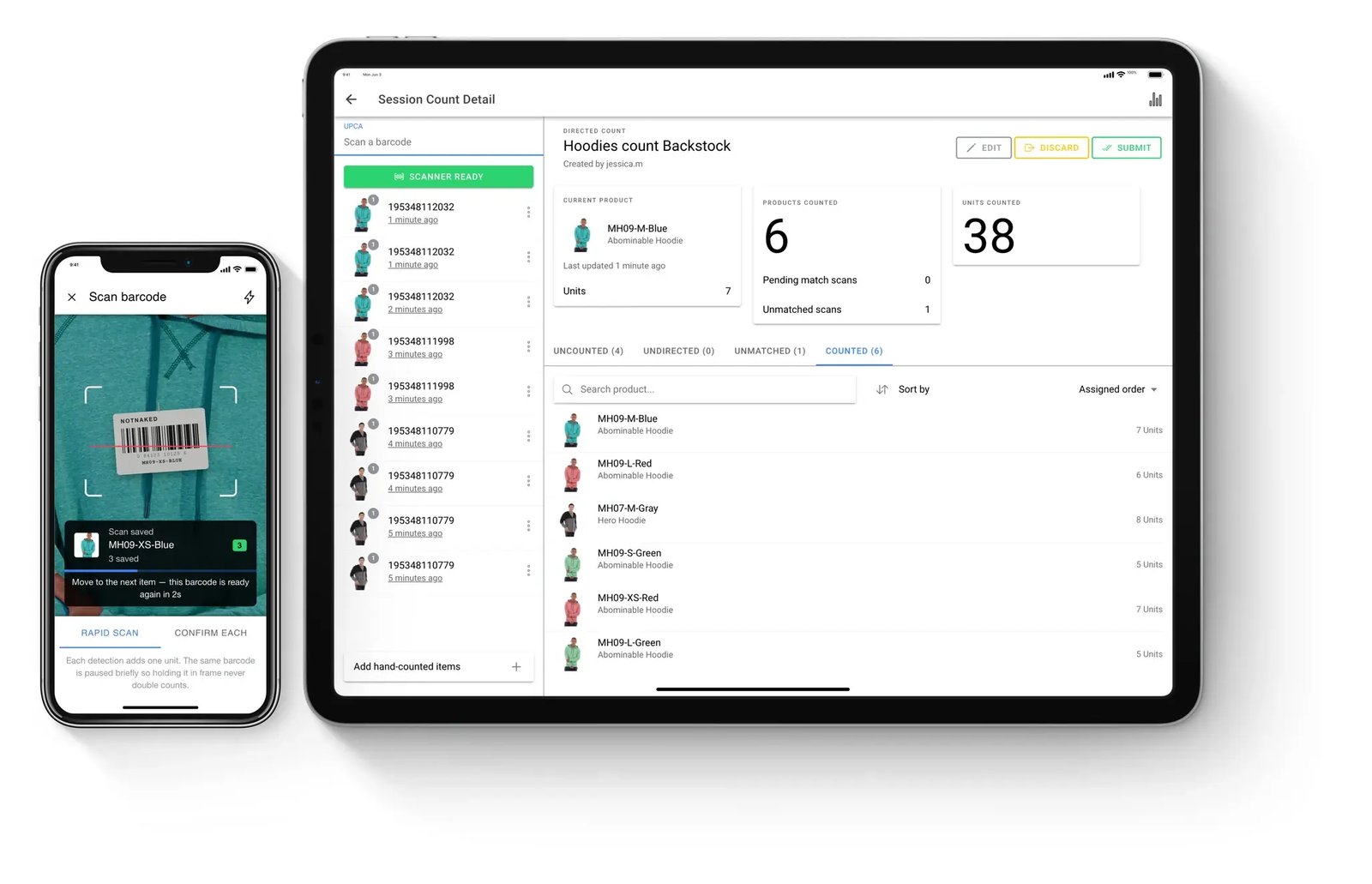
HotWax built native Shopify POS screens for counting, so teams that prefer Shopify’s own screens count there. Each count still goes to head office for approval in the OMS, which then updates stock in Shopify.
Counts from HotWax Cycle Count and from Shopify POS go through the same approval in the OMS.
Approved counts update the OMS, which syncs the new stock to Shopify.
Each approval keeps the count, the product, the reason, and who decided.
Shopify is where you sell. HotWax Commerce decides what each Shopify location can sell and where each order ships from. Behind the number Shopify shows, HotWax holds safety stock for walk-in shoppers, skips stores that are full or past their cutoff, and reroutes an order when a store can’t fill it. Shopify keeps running your storefront, checkout, and POS.
Through the HotWax Order Management System app on the Shopify App Store, installed on each Shopify store you run. Products, orders, stock, fulfillments, tracking, and returns move between Shopify and HotWax Commerce through Shopify’s own APIs, and HotWax follows Shopify’s summer and winter releases so the connection keeps up.
They can stay inside Shopify POS. HotWax Fulfillment, HotWax BOPIS, HotWax Receiving, and HotWax Cycle Count all open inside Shopify POS, so store teams ship orders, get pickup orders ready, receive stock, and count without switching apps. Teams that prefer native Shopify POS screens can use those instead: they ship from the Shipping list, work pickup orders from the Pickup list, receive approved transfers as Shopify transfers, and count in native POS screens that HotWax built. Either way, the OMS routes every order, keeps stock in sync, and approves each count before stock changes.
Yes, that is the most common setup. NetSuite stays the system of record: HotWax Commerce reads stock and purchase orders from NetSuite, runs every Shopify order through routing, stores, and returns, then posts orders, fulfillments, store sales, gift cards, and returns back to NetSuite. Unlike a connector that only moves data, HotWax works out what each location can sell and where each order ships from.
In real time. Each receipt, sale, return, count, and reservation updates the sellable number for every Shopify location as it happens, and only the change is published, so a retry never counts twice. Orders still waiting to be routed come off what Shopify can sell, so no unit is sold twice.
The order moves, and Shopify moves with it. When a store rejects an item or routing picks a better location, HotWax Commerce updates the Shopify fulfillment order to the new location, and tracking goes back to Shopify once the order ships.
When a shopper exchanges an item in Shopify POS, Shopify keeps the return and the new item on the same order, which breaks clean accounting in your ERP. HotWax Commerce splits it into a return linked to the original order and a new exchange order, with the exchange credit and any extra payment on each, so your ERP posts both correctly. Returns from Shopify, Shopify POS, or your returns app, such as Loop, come in the same way, and each item is restocked at the store that took it back.
Yes. Brands with a store per country or per brand connect each Shopify store to HotWax Commerce, share one catalog from a main store, and route every order through the same rules. ADOC runs stores in five countries this way.
Yes. HotWax Commerce counts a bundle at each location by its scarcest part, then adds up the locations, so Shopify never sells a bundle no single location can pack. Bundle stock reaches Shopify even when you use the Shopify Bundles app. Physical gift cards sync like any product, and digital gift cards sell without a stock limit.
Most retailers go live in 3 to 6 weeks, because the Shopify and NetSuite connections are pre-built. Pricing is based on order volume, not per user, so store teams and customer service work in HotWax without seat fees.
See how HotWax keeps Shopify stock right and routes every order to the best location. Live in 3-6 weeks.