
Headquarters
175 S Main St Suite 1310,
Salt Lake City, UT 84111

Imagine a busy bakery on a Friday afternoon. Two customers want the same cake. One needs it today. The other is picking it up tomorrow. There’s only one cake ready.
Who should get it?
This kind of decision plays out thousands of times a day in order fulfillment. The way you prioritize orders doesn’t just impact customer experience. It affects shipping costs, inventory availability and overall profitability.
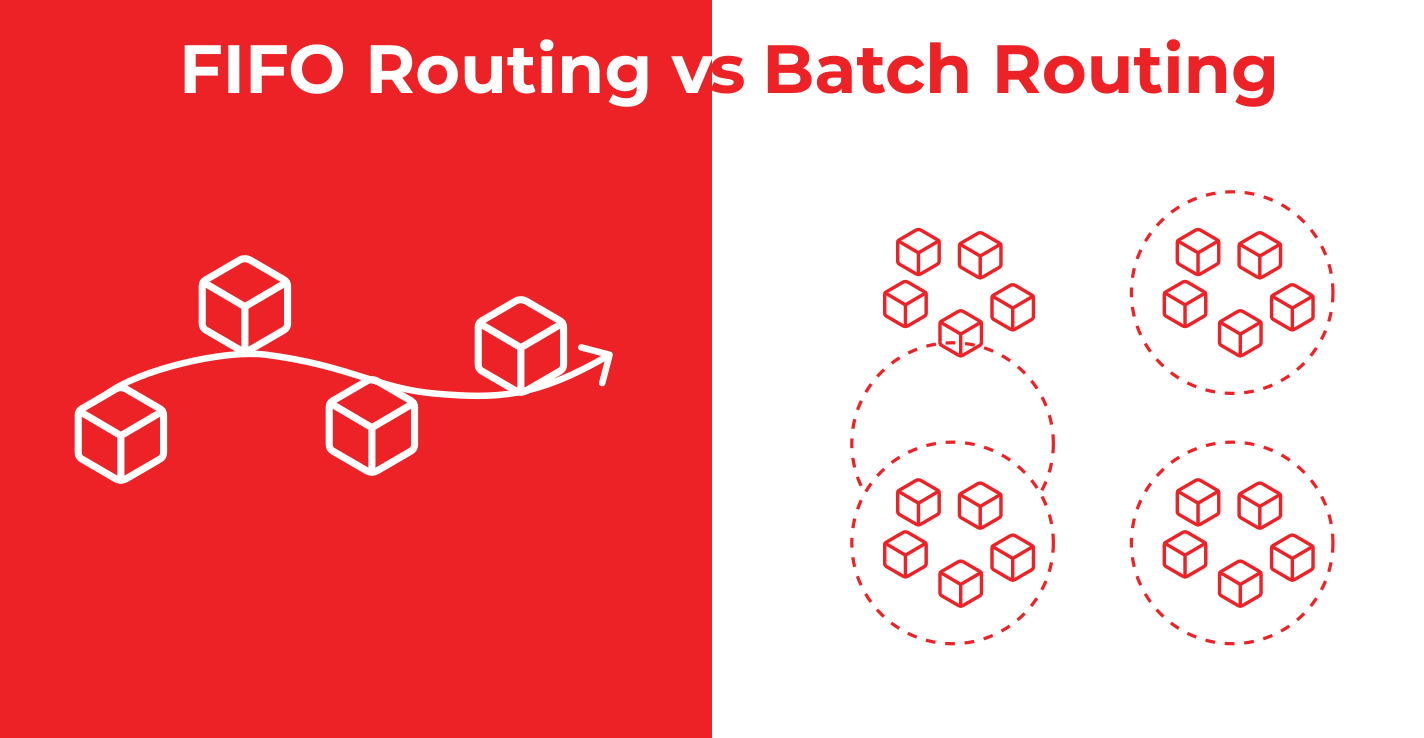
For years, the most common way to route orders was to handle them in the order they were received. In technical terms, that’s FIFO, First‑In First‑Out. As soon as an order arrived, the order routing engine applied whatever rules were in place and sent it on its way. That approach works fine when everything is simple: all orders are equal, stock is plentiful, and there’s only one place to ship from.
Modern retail is more complicated. Orders pour in from multiple channels. Some need to ship the same day, while others can wait. Inventory sits in warehouses and on store shelves. When a same‑day order lands right after a standard shipment, FIFO gives them the same priority. The first order in line might eat up stock in the closest store, forcing a higher‑priority order to ship from farther away or be split across multiple locations. Costs rise, delivery times slip and local customers may find empty shelves where there should have been stock.
Batch routing changes the timing of the decision without slowing the pace of fulfillment. Instead of routing each order the instant it arrives, the order routing engine groups orders and evaluates them together at set intervals. During each of these runs, the engine sorts orders by criteria you care about: promised SLA, shipping method, channel, order priority, even product category. Within each group, orders are processed in a sequence that reflects their urgency and business importance.
For example, same‑day delivery orders might be grouped and routed every few minutes to ensure they go out first. Standard orders could be routed every hour, giving the engine time to see if more efficient options become available. By grouping similar orders, you can apply the right logic to each batch and avoid letting one early arrival disrupt a whole chain of decisions.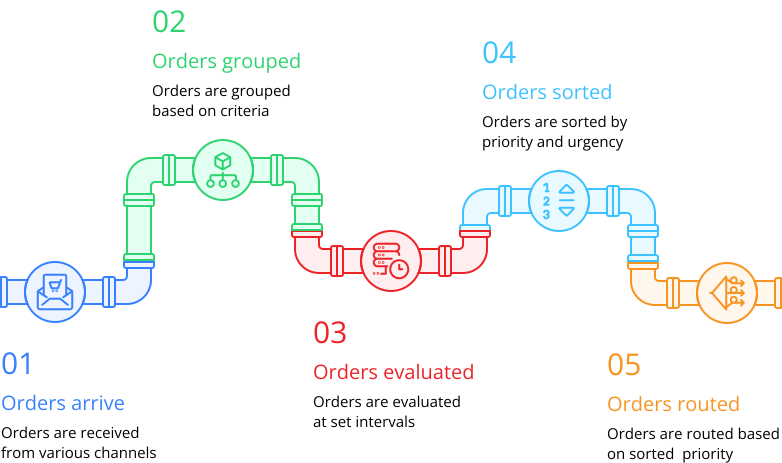
Evaluating orders in batches provides control that FIFO lacks. It allows retailers to:
Align with business goals. Routing runs can be scheduled differently for different order types: every few minutes for same‑day deliveries, hourly for next‑day shipments, or even less often for standard orders. This flexibility ensures that the routing process mirrors service commitments and cost objectives rather than reacting blindly to the order queue.
Moving from FIFO to batch routing is less about introducing complexity and more about introducing control. When the order routing engine can see a set of orders together, it makes better decisions on which orders to fulfill first and where to pull inventory from. It takes into account deadlines, service levels and store priorities instead of letting timing alone drive the outcome. That leads to more predictable costs, happier customers and shelves that stay stocked for walk‑ins.
* * *
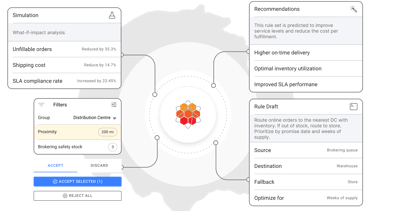
HotWax Commerce’s order routing engine is designed to enable this transformation. It allows you to schedule routing runs, define order grouping criteria and specify inventory allocation rules, giving you the control needed to manage a multi‑location network without letting timing alone dictate your decisions.
Book a demo to see how you can take control of order routing and make better fulfillment decisions across locations.






175 S Main St Suite 1310,
Salt Lake City, UT 84111