
Headquarters
175 S Main St Suite 1310,
Salt Lake City, UT 84111



Same-day fulfillment gives customers a strong reason to click “Buy Now.” Knowing their order will arrive in just hours can be the final push to complete a purchase.
Delivering on this promise is no small feat.
Even if you ignore speed limits on most roads, no vehicle is going to move product from your warehouse to a customer’s doorstep 100 or more miles away in a day, and it's highly unlikely you have a warehouse down the street from most of your customers. That's why most retailers use their store network to fulfill same-day orders.
This order fulfillment checklist walks you through what it takes to prepare for same-day fulfillment, from store layout and staffing to inventory accuracy and courier coordination based on what works in real retail environments.
Not every store is designed to handle same-day orders. Before rolling it out, make sure the store is actually capable of this. Here’s what to look for:
Backroom space: A dedicated area where staff can pick, pack and ship orders without disrupting the sales floor.
Street access: Direct access or a simple courier pickup route so drivers can collect orders easily
Staff availability: A team or rotating associates who can manage fulfillment tasks during store operation hours.
Cutoff times make same-day fulfillment predictable. They set expectations for customers and give stores a structure for planning the day.
Fulfillment should take place in defined windows instead of happening whenever staff are free. For example, stores may set a morning window from 10:00 to 11:30 AM and an afternoon window from 2:00 to 3:30 PM. These structured windows help staff organize their time and align with courier pickups.
Stores use the defined windows as the foundation. At the same time, they can make reasonable on-the-spot adjustments based on the situation. A high-volume location follows cutoff rules closely to manage workload. A quieter store with extra staff may prepare an order earlier than scheduled if it helps improve delivery speed. These adjustments support the routine rather than replace it.
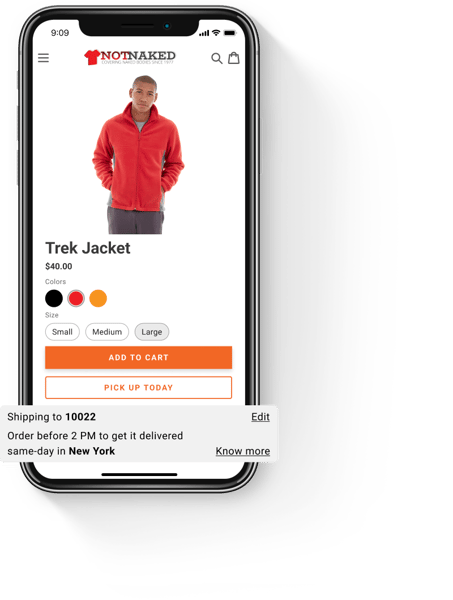
Clearly communicate the cutoff time for same-day fulfillment on the product detail page (PDP). For example: “Order by 2 PM for same-day delivery.” Orders placed after the cutoff shift to the next day.
Decide how in-store fulfillment will be credited and rewarded. Will the store receive full sales credit for an online order it fulfills? Will the associate who picked and handed off the order be recognized?
These choices shape how managers present same-day fulfillment to the team.
If fulfillment drives store revenue and appears in store performance reports, associates treat it as part of their job rather than an extra chore. If you choose to attach incentives, keep the model simple: small bonuses or store-level KPIs tied to accuracy and on-time handoffs go further than complex commission rules.
Clarity also prevents resentment. Tell associates exactly how these orders affect store targets and individual goals. Show the numbers: how many same-day orders the store fulfilled last week, average fulfillment time, and error rate. When teams see a direct link between effort and results, behavior changes.
Decide whether fulfillment is a shared responsibility or owned by dedicated staff. Both models work if they’re set up intentionally. Rotation keeps everyone trained and reduces single-person risk; dedicated ownership speeds execution and reduces errors in high-volume stores. A practical compromise is hybrid: assign core responsibilities (packing, final QA, and courier handoff) to trained owners and rotate picking and packing tasks among the team for broader coverage.
Training must be practical, and repeated. New tasks, scanning, label printing, package prep, and handoff verification, should be demonstrated, practiced, and measured. Create one-page SOPs at the packing station and run a short role play: incoming order: pick, pack, confirm in app, prepare for pickup. Make sure associates understand how to escalate exceptions and who to call when inventory doesn’t match the system.
Easy-to-use store fulfillment apps are important for same-day. Associates need to check new orders, scan and confirm picks, print packaging slips, generate shipping labels, and mark an order ready for shipping, all from a handheld device.
Avoid desktop-only flows that force staff to run to a counter.
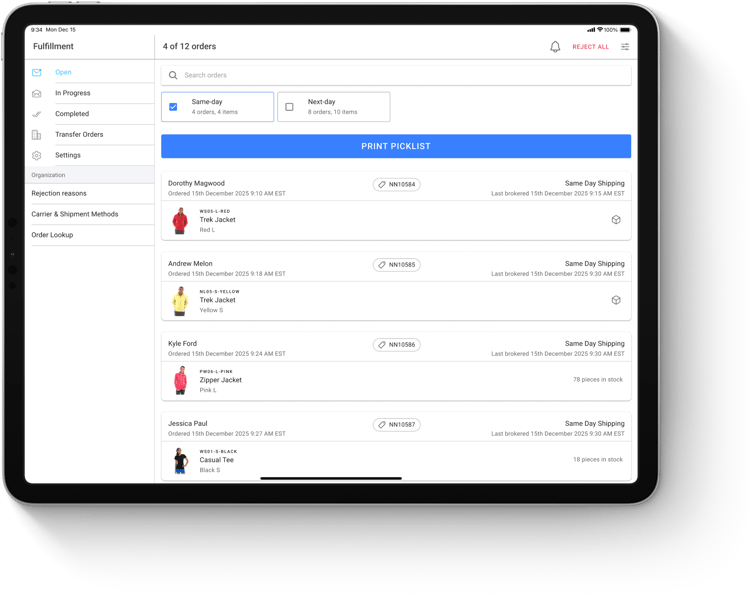
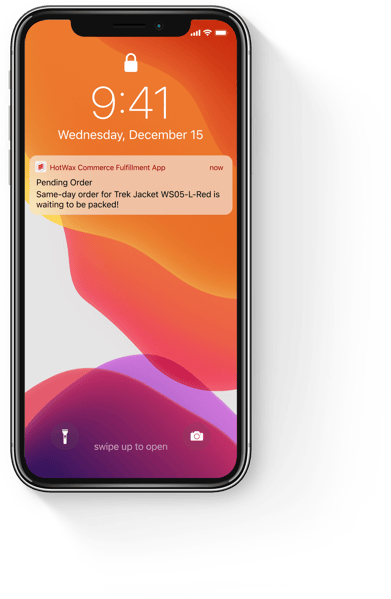
Push notifications for unprocessed orders, missed cutoffs, or courier arrival windows prevent same-day fulfillment orders from slipping through.
A reliable packing and shipping workflow protects accuracy and speed. Set a single, dedicated packing station stocked with needed materials: labels, bags/boxes, tape, tissue, and receipts. Keep packing materials in a standard kit to avoid searching for supplies. Use a simple packing checklist at the station: SKU match, item condition check, required attachments (receipts, returns instructions), and secure closure.
Assign a labeled shelf or counter near the staff entrance or loading zone. Drivers should always go to the same spot. If multiple couriers operate at a store, color-code the area or use a courier manifest sheet to avoid mistakes.
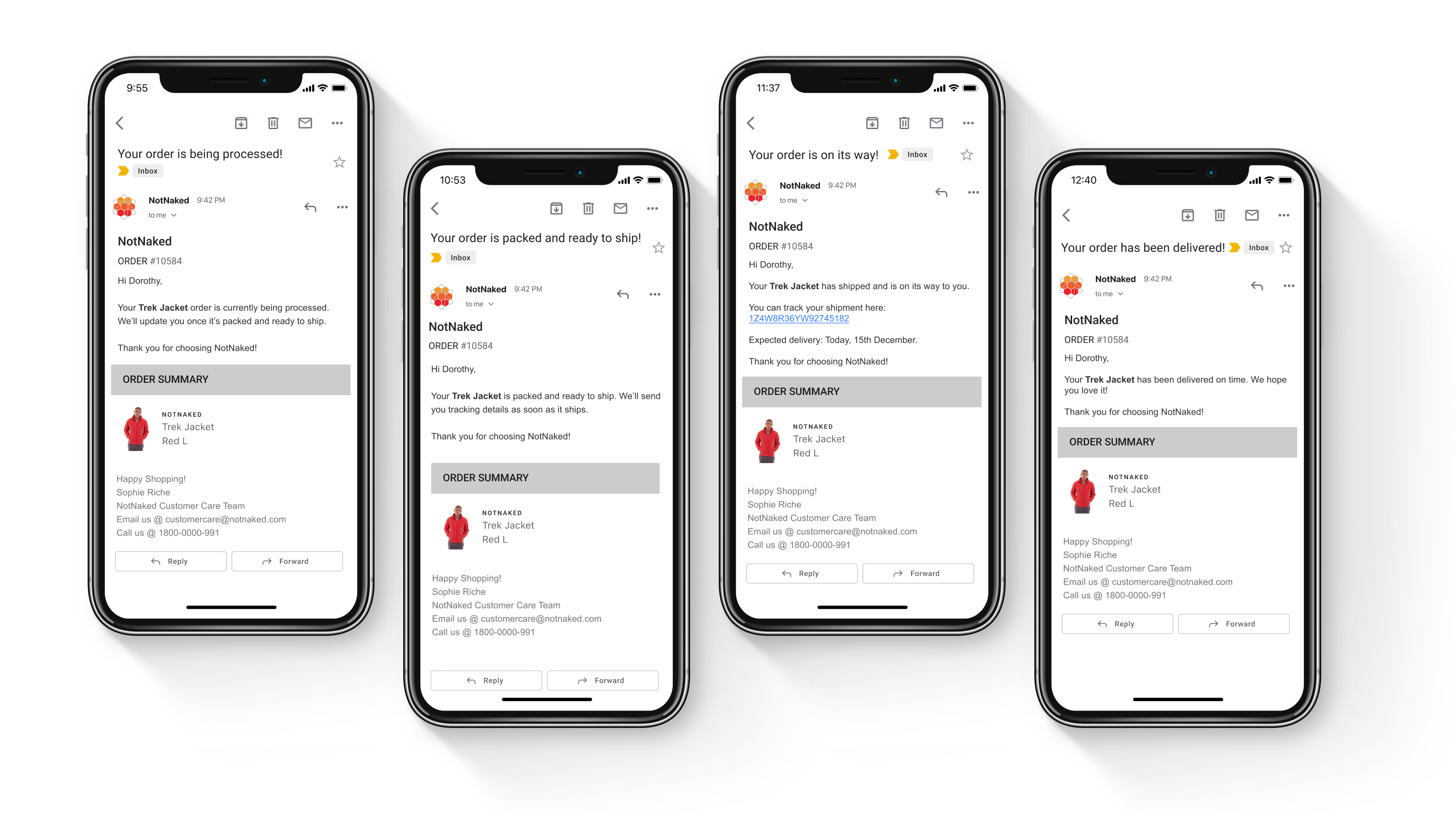
Communicate with customers at key points: order confirmed, being prepared, out for delivery, and delivered. If an exception occurs, item not found or courier delay, notify the customer proactively with the adjusted expectation and any offered remedy (reship, refund, or store pickup).
Exceptions will happen. The difference between a minor hiccup and a broken promise is a pre-defined playbook. If an item cannot be found, associates should follow a short decision tree: search for X minutes, reject the order with the optimal rejection reasons so that it can be auto rerouted to the next best fulfillment location.
Handling returns for same-day fulfillment orders is largely the same process as other returns, but it needs to be just as easy for the customer. If customers return same-day purchases in store, associates should be able to initiate a BORIS (buy online return in store) flow and update inventory in real time. Refund status and any required inspections should be visible both to the CSR and the customer. Track return sources and reasons, if a specific SKU sees a high return rate after same-day, investigate the root-cause.
Inventory accuracy underpins everything. Implement directed cycle counts on fast-moving SKUs. Daily counts for critical items, or at minimum a daily check of on-hand quantities for same-day SKUs, greatly reduce “item not found” exceptions.
Use small stock buffers on items so customers aren’t promised products that don’t exist. Track trends from your mispick and cancellation reports, frequent problems usually point to fixable processes.
Measure what matters and keep it local. Stores need daily and weekly visibility into a handful of metrics: average time to pick (from order accepted to ready for handoff), fulfillment rate (same-day orders completed on time), pick accuracy (mispicks per 100 orders), and courier pickup reliability.
Use an end-of-day store report that lists totals: same-day orders received, fulfilled on time, fulfilled late, canceled (with reasons), and pending rollovers.
For managers, a weekly performance analysis should include trends: busiest windows versus POS traffic, repeat exception types (not found, damaged, mispick), and inventory gaps. These numbers tell you whether the issue is staffing, layout, or stock accuracy.
Data turns good processes into great ones. Reporting should be actionable and short: an end-of-day store summary and a weekly performance analysis. The daily report answers operational questions, how many same-day orders arrived, how many were fulfilled on time, which orders rolled to the next day, and why any were canceled. The weekly report focuses on improvement, average fulfillment time, fulfillment rate by window, most common exception types, rejection reasons. Use these insights to tweak windows, adjust staffing, rearrange pick paths, or retrain staff.
Offering same-day fulfillment is easy. Fulfilling it consistently is the real challenge.
Retailers who get this right don’t just meet delivery promises, they earn customer trust, boost conversions, and engage their store teams in meaningful ways. Every part of the process, from store selection to reporting, plays a role in making same-day fulfillment work.
If you’re ready to prepare your stores to deliver on this promise, we can help you set the right foundation without overburdening teams or missing SLAs.
* * *
Consult with an expert and begin your journey toward reliable same-day fulfillment.



.jpg?width=400&name=Shopify%20Store%20Fulfillment%20vs%20HotWax%20Store%20Fulfillment%20(3).jpg)

175 S Main St Suite 1310,
Salt Lake City, UT 84111