
Headquarters
175 S Main St Suite 1310,
Salt Lake City, UT 84111



BOPIS works until the moment a store associate opens the app, goes to the shelf, and finds the item isn't there.
What happens next determines whether the retailer keeps the sale, saves part of the sale, or loses it entirely. Too often, the default answer is cancellation. The order gets canceled, the customer gets a refund email, and a completed purchase turns into a broken promise.
That failure moment is where retailers need a recovery flow that keeps the customer in control and preserves as much of the order as possible.
Even with strong inventory controls, store inventory is constantly moving. An associate may go to pack a BOPIS order and find that the item is damaged, misplaced, being tried on, or was just picked up by a walk-in customer. So even when a system shows sellable inventory available for pickup, the item may not be fulfillable by the time the order is being prepared.
These are picking failures, and they are not edge cases. In high-volume BOPIS operations, even a small picking failure rate can create a steady stream of disappointed customers and lost revenue.
The question is not whether BOPIS fulfillment failures will happen. The question is whether the retailer can recover from them without treating cancellation as the only outcome.
When a BOPIS pickup order fails during fulfillment, the customer experience should not jump straight to a cancellation email. A better recovery flow gives the customer clear, practical alternatives based on available inventory and what the retailer can actually support.
One option is pickup from another location. If the item is available at a nearby store, the customer can choose that store instead of losing the order entirely.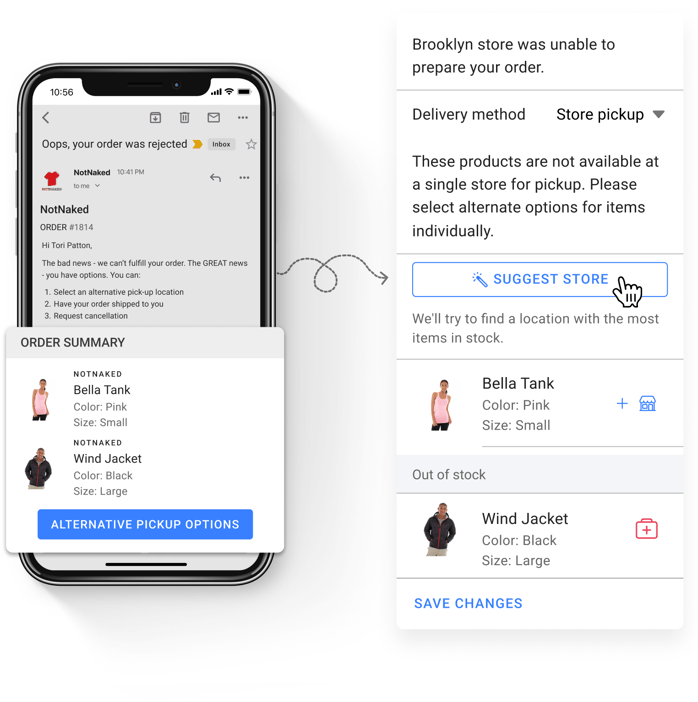
Another option is ship-to-home. If the customer no longer wants to visit another store, the order can be converted to delivery and fulfilled from an eligible location with available inventory.
Cancellation still has a place, but it should be an option, not the default. If no acceptable fulfillment path exists, the unavailable item or order can be canceled cleanly and transparently.
For multi-item orders, the recovery flow can be even more flexible. A customer may pick up the available item while the unavailable item is canceled. Or one item can remain assigned to pickup while another ships to home. The right outcome depends on inventory availability, fulfillment rules, and the retailer's customer promise.
In dense retail markets, such as major metros or suburban corridors with multiple locations, alternate pickup is often the simplest save.
If a customer learns that the item is unavailable at their original pickup store but available three miles away, many will accept the new pickup location. The key is making that choice easy. Customers should not have to call stores, guess which locations actually have inventory, or place a second order.
A strong BOPIS recovery flow surfaces nearby eligible stores, prioritizes practical options, and lets the customer choose the next best pickup location.
Not every retailer has another store nearby. In smaller markets, rural areas, or single-store scenarios, alternate pickup may not be useful.
In those cases, ship-to-home becomes the more practical recovery path. If inventory is available from another eligible fulfillment location, the customer can receive the item at home instead of being forced into a cancellation.
This is especially important for customers who would otherwise have to travel a long distance. A shipment may be a better customer experience than asking them to drive to another store.
Not every BOPIS fulfillment failure affects the whole order. A customer may order three items for pickup, and only one of them fails during picking.
If the system treats the order as all-or-nothing, the retailer risks canceling items that were actually available. A better flow lets the retailer preserve what can still be fulfilled while handling the unavailable item separately.
That might mean the customer picks up two items and cancels one. It might mean one item is picked up while another ships to home. Or it might mean the full order is canceled if that is the cleanest option. The important point is that the system should support the decision rather than force the same outcome every time.
Every failed BOPIS order is a moment of risk. If the only response is cancellation, the retailer loses revenue and damages the customer's trust. If the response gives the customer a reasonable alternative, the sale may still be saved.
At scale, that becomes a meaningful revenue recovery opportunity. It also gives operations teams a clearer view of where fulfillment is breaking down: which stores have the most fulfillment failures, which items fail most often, and which recovery paths customers actually choose.
The customer relationship matters too. A customer who receives a thoughtful recovery option has a very different experience from one who receives a blunt cancellation email. The speed, clarity, and flexibility of the recovery flow often determine whether they come back.
If you are evaluating your current BOPIS failure handling, start with a few direct questions.
What happens today when a store associate cannot find an item? Does the order get canceled immediately, or does it move into a recovery flow? Can customers choose pickup from another location? Can they switch to ship-to-home? Can unavailable items be canceled while available items are still fulfilled? Are recovery options configurable by store, market, order type, or fulfillment strategy? Are you tracking failure reasons by store and item?
If the answers feel uncomfortable, that is the gap worth closing.
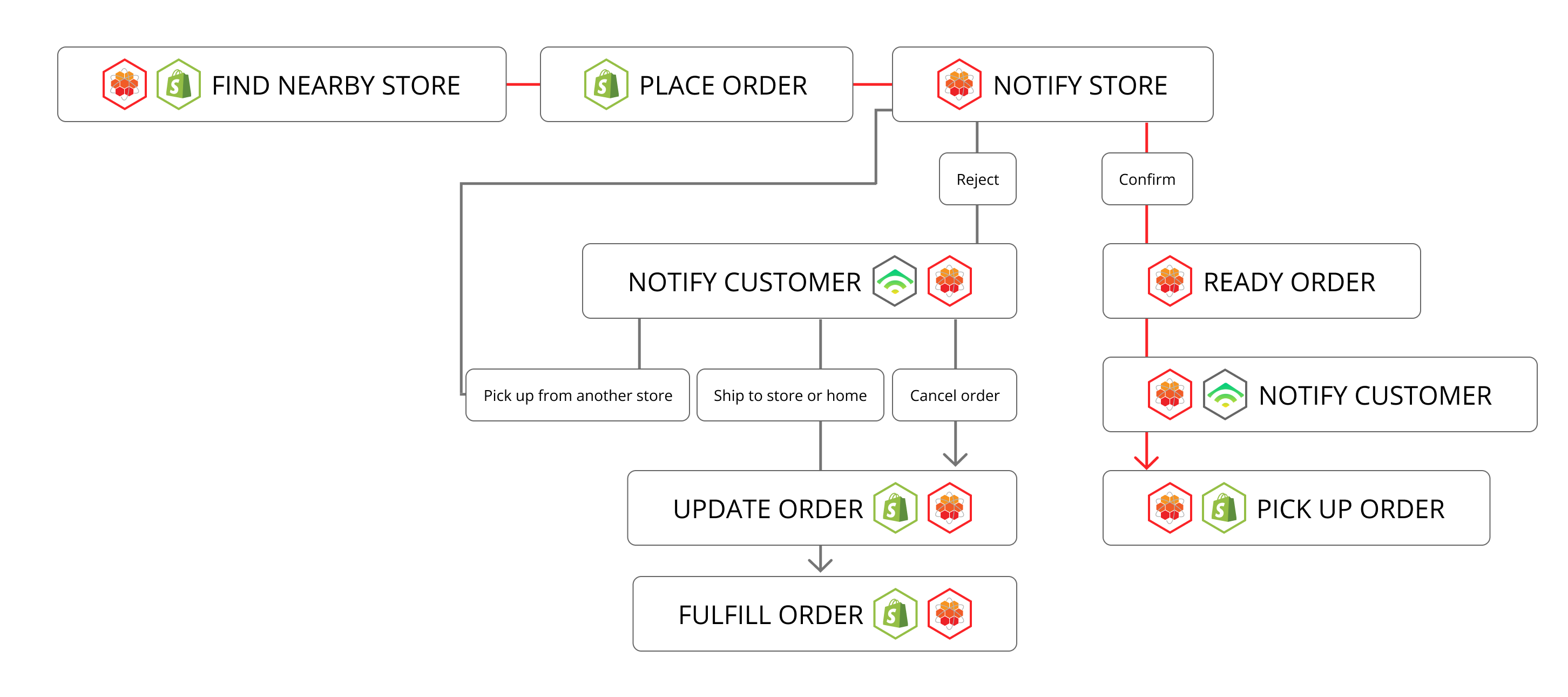
HotWax Commerce Order Management System helps retailers configure BOPIS recovery paths for alternate pickup, ship-to-home, clean cancellation, and partial-order recovery. Book a demo to see how it fits into your fulfillment operations.
* * *
BOPIS fulfillment failures do not have to end in cancellations. When retailers give customers clear recovery options, such as alternate pickup, ship-to-home, or partial-order fulfillment, they can preserve more revenue while creating a better customer experience.
The result is simple: fewer lost sales, more flexible fulfillment, and a recovery process that keeps customers in control when inventory does not go as planned.
Book a demo to see how HotWax Commerce helps retailers configure BOPIS recovery flows for alternate pickup, ship-to-home, and partial-order fulfillment.




175 S Main St Suite 1310,
Salt Lake City, UT 84111