Available to promise (ATP) is the amount of inventory a retailer can safely commit to a new order. It starts with what is on hand, then takes out stock that is already reserved, held back as safety stock, or sitting in a location that cannot fulfill the order.
That is why a product marked “in stock” is not yet a promise.
Before a customer pays, they want to know whether they can actually buy the item, choose the fulfillment option they need, and receive it when expected. A raw stock count cannot answer those questions on its own.
A reliable checkout promise depends on two connected decisions. First, the order management system (OMS) determines what inventory is safe to sell and which fulfillment options can be offered. Then, after the order is placed, routing determines which eligible facility should fulfill it.
When those decisions use the same operational rules and inventory picture, retailers can make stronger promises without exposing inventory they cannot confidently fulfill.
Available to promise vs. inventory on hand
Inventory on hand answers a basic question: where does the retailer have stock?
Available to promise answers a harder one: what can the retailer safely offer this customer, through this channel and fulfillment method?
Suppose a store shows five units on hand. All five may not be available for an online order. Some could already be reserved. The retailer may protect a portion as safety stock for walk-in demand. The location may be excluded from online selling, or the SKU may not be eligible for fulfillment from that store.
Publishing the raw on-hand quantity would create the appearance of availability without accounting for those constraints. That is why an OMS needs to calculate a sellable quantity, often called Online Available to Promise (Online ATP), before inventory reaches the eCommerce platform. Faster syncing does not change this, which is why real-time inventory management on its own still oversells.
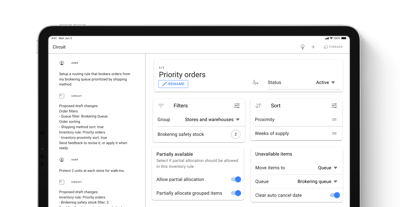
In HotWax Commerce, Online ATP represents the inventory that can be published to eCommerce after deductions and eligibility rules are applied. Those deductions can include reservations, safety stock, thresholds, orders waiting to be brokered, and inventory from facilities that do not participate in online selling.
What the OMS should decide before checkout
Before checkout, the OMS should give eCommerce a dependable answer to two customer-facing questions. The storefront needs the result of the fulfillment logic, not the logic itself.
How available to promise is calculated
The first decision is the sellable quantity, not simply the quantity on hand.
An OMS should account for inventory already committed to orders and the buffers a retailer uses to protect against stock discrepancies or in-store demand. It should also update availability as inventory, reservations, and order commitments change.
This is the foundation of a trustworthy promise. If the quantity published online is overstated, every decision after it begins with bad information.
HotWax Commerce Unified Inventory applies reservations, safety stock, thresholds, and facility participation rules inside the OMS to produce the sellable quantity eCommerce receives. eCommerce does not evaluate the locations behind that number.
Here is a simple example for one SKU at one store:
| On hand |
5 |
| Reserved for open orders |
−1 |
| Safety stock for walk-in shoppers |
−2 |
| Available to promise online |
2 |
If the store does not take part in online selling, its available to promise online is zero, no matter what is on the shelf.
Which fulfillment options can the customer choose?
eCommerce presents shipping and pickup options using availability supplied by the OMS. It does not decide which facility should ship an order.
For ship-to-home, eCommerce only needs to know that the order can be fulfilled. For pickup, it captures the store selected by the shopper.
Once the customer places the order, the OMS takes over the fulfillment decision.
What routing decides after checkout
Routing turns the pre-checkout promise into a fulfillment assignment. For ship-to-home, the OMS selects the source store, warehouse, or 3PL. For pickup, the shopper’s selected store guides fulfillment or a configured ship-to-store workflow. eCommerce does not need to evaluate the network behind either decision.
The OMS first narrows the candidate locations to those that can handle the product and order. Configurable order routing then evaluates the remaining candidates against the retailer’s fulfillment strategy using factors such as:
-
Current inventory availability
-
Facility eligibility and fulfillment capabilities
-
Shipping method and customer proximity
-
Facility order capacity
-
Order priority and promised service level
-
Split-shipment rules and fulfillment cost
This distinction matters. Online ATP determines what can be offered for sale. Routing determines where an accepted order should be fulfilled.
The two decisions should be connected, but they are not interchangeable. A retailer can have accurate inventory visibility and still route an order poorly. It can also have sophisticated routing rules that cannot recover from inventory that was overpromised before checkout.
What happens when the promise is weak?
An unreliable promise creates problems long after the customer leaves checkout.
-
Cancellations increase because the inventory shown online was not truly sellable.
-
Store teams receive orders they are not equipped or staffed to fulfill.
-
Orders travel from farther locations, increasing shipping cost and delivery time.
-
Split shipments increase when inventory cannot be allocated as expected.
-
Customer service teams handle more “Where is my order?” contacts and exception cases.
-
Retailers hide too much inventory online to compensate, losing sales they could have fulfilled.
These outcomes often look like separate inventory, fulfillment, or customer-service issues. In practice, they can begin with the same problem: the promise made before checkout was disconnected from the rules used to fulfill the order afterward.
How HotWax Commerce connects availability and routing
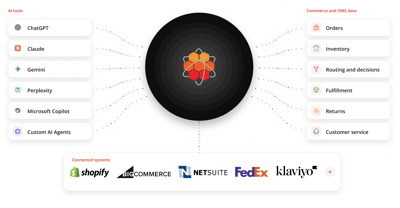
HotWax Commerce OMS connects inventory from systems such as ERP, POS, WMS, 3PL to create a holistic inventory view.
Retailers can use that foundation to calculate Online ATP, protect stock with safety stock and thresholds, control which facilities participate in online selling, and publish sellable inventory to commerce channels.
Once an order is captured, HotWax Commerce brokers it through configurable routing rules. Those rules help select an appropriate fulfillment location based on current inventory, proximity, facility capabilities, capacity, shipping method, order priority, and the retailer’s approach to splitting orders.
Together, these capabilities help retail teams answer the questions that sit behind every checkout promise:
-
Is this inventory genuinely available to sell?
-
Is it available for the channel and fulfillment method the customer selected?
-
Which locations are eligible to fulfill the order?
-
Can the order be allocated without overloading a facility?
-
Can the retailer keep the promise without creating avoidable costs or exceptions?
The goal is not to expose every unit or route every order to the closest store. It is to sell the right inventory and fulfill each accepted order through the best available path.
A checkout promise is an operations promise
Customers experience one promise at checkout, but keeping it requires coordinated decisions across inventory, fulfillment, and routing.
A strong OMS should make sellable availability dependable before the order is placed and preserve that intent when the order is allocated afterward. That means using available to promise (Online ATP) to decide what can be offered, fulfillment eligibility to decide which options are valid, and routing to decide where the accepted order should go.
When those layers work together, retailers can expose more inventory with confidence, reduce avoidable cancellations, and give store and warehouse teams orders they can realistically fulfill.
Frequently asked questions about available to promise
* * *
Book a demo to see how HotWax Commerce brings unified inventory and order orchestration together to support promises customers can trust.